What Most Participants Worry About Before Their First Psilocybin Retreat
Updated: Aug 5
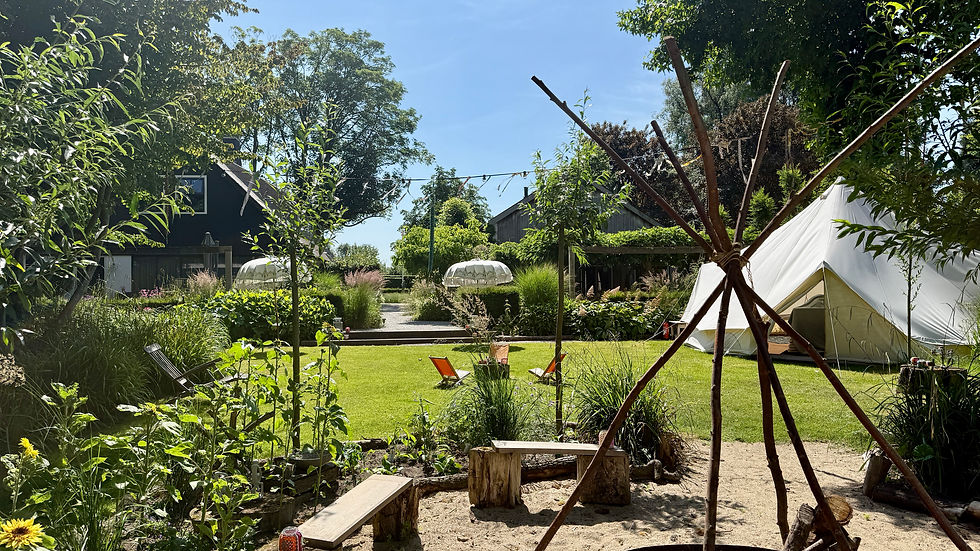
Every retreat begins in almost exactly the same way. Cars pull into our retreat centre on the outskirts of Almkerk. Bags are unloaded, introductions begin, and there are often a few nervous smiles as people step through the front door.
From the outside, everyone seems calm. But after welcoming hundreds of participants to Elevated Mind Retreats, I've learned something important: most people arrive carrying remarkably similar fears.
It doesn't matter whether they're a CEO, a teacher, a healthcare professional, a parent, or someone who has spent years working on themselves. Beneath the surface, many are asking exactly the same questions.
The beautiful part is that, by the end of the weekend, many participants tell me those fears never became reality. Many also leave with something they never expected: genuine friendships and a sense of belonging that continues long after the retreat has ended.
If you're feeling nervous before your first retreat, you're certainly not alone.

First Psilocybin Retreat: What If I'm Too Anxious?
This is probably the concern I hear most often. Not just anxiety about attending their first psilocybin retreat, but anxiety that has been part of someone's life for months or even years.
Many participants tell me they almost cancelled their booking. Some struggle with constant overthinking, while others worry they simply won't be able to relax or let go. Others wonder whether their anxiety will prevent them from having a meaningful experience.
What I've learned is that feeling anxious before arriving says very little about how the retreat itself will unfold. In fact, it makes perfect sense. You're stepping into an unfamiliar environment with people you've never met before, and that naturally brings uncertainty.
Our role isn't to make anxiety disappear. It's to create an environment where you feel supported enough that anxiety no longer has to be in control.
One of the very first things we invite participants to do is hand over their phone, smartwatch, and any other devices before the retreat officially begins. For many people, this is surprisingly difficult. Yet it also marks the moment they begin stepping away from emails, notifications, responsibilities, and the constant awareness of time.
Research suggests that reducing digital distractions and spending time in calm, restorative environments can help reduce stress and support nervous system regulation. Over the years, we've found that beginning the retreat this way allows people to become more present, connect more deeply with themselves and others, and settle into the weekend much more quickly.
This is followed by a gentle grounding meditation. Throughout that meditation, I repeat three simple phrases that become the foundation of the entire retreat:
You are safe.
You are supported.
You are not alone.
Those aren't simply reassuring words. They become the thread running through everything we do over the following three days.
Nothing in our programme happens by accident. Every part of the retreat has evolved over years of experience—both from our own journeys as participants and from guiding hundreds of people ourselves. The flow of the weekend is intentional, with each element carefully designed to help participants genuinely feel safe, supported, and never alone.
What if I don't fit into the group?
For many people, the thought of joining a group of strangers feels almost as intimidating as the retreat itself.
Some participants live with social anxiety, while others simply don't enjoy group settings. They worry that everyone else will be more confident, more experienced, or already know each other.
The reality is very different.
Almost nobody knows anyone else when they book. The process of becoming part of the group actually begins around two weeks before the retreat.
At that point, we open a private WhatsApp group for everyone attending. While its practical purpose is to coordinate travel and ride shares, something much more meaningful often happens.
Many participants arrange to meet for a cup of tea at Gorinchem station before travelling the final fifteen minutes together to our retreat centre. By the time they step through the gates in Almkerk, they've already shared a conversation, learned each other's names, and realised they're not the only ones feeling a little nervous.
That first connection makes a remarkable difference.
After our grounding meditation, we gather in a welcome circle. Everyone is invited to share as much or as little as they feel comfortable with—why they've come, what they hope to gain, or simply how they're feeling in that moment.
Something beautiful almost always happens during that first conversation.
Participants begin to hear stories that sound surprisingly familiar. Someone speaks about anxiety. Another shares feelings of burnout, grief, self-doubt, relationship challenges, or simply feeling lost. Around the circle, heads begin to nod as people recognise parts of their own story in someone else's.
For many, this is the first moment they truly realise the third message from the grounding meditation:
You are not alone.
Only after creating that sense of connection do we move into our trust exercises, allowing the group to deepen those first connections naturally and without pressure.
Those simple moments change the atmosphere remarkably quickly. By creating connection before vulnerability, individuals gradually become a group—and a group gradually becomes a community.

One of my favourite moments happens on Sunday afternoon. The same people who arrived quietly on Friday are now sitting together over lunch, laughing, exchanging phone numbers, and hugging goodbye.
Over the years, I've watched many of those connections continue long after the retreat has ended. Participants keep supporting one another, meet up again, and sometimes even return to Elevated Mind Retreats together months or even years later.
They first walked through our gates as complete strangers.
Seeing them come back as friends is one of the greatest privileges of my work.
If you'd prefer a completely private experience with your partner or close friend, our Private Psilocybin Retreat may be a better fit.
What if I can't let go?
Many people believe they need to know how to surrender before they arrive.
They don't.
This fear is especially common among people who have spent their lives solving problems, managing responsibilities, or staying in control. They worry they'll spend the entire ceremony analysing everything instead of experiencing it.
Ironically, they're rarely the only person thinking that.
The retreat isn't about forcing yourself to let go. It's about gradually creating the conditions in which letting go becomes possible.
That is why the ceremony isn't the first thing we do. Beforehand, participants experience guided breathwork, time in nature, meditation, and opportunities to connect with themselves and the group. Breathwork helps release physical and emotional tension, while spending time outdoors allows people to slow down, become present, and reconnect with themselves away from the constant stimulation of everyday life.
Like every part of the weekend, this sequence has evolved over years of guiding retreats. Every element is there for a reason—to help participants feel grounded, supported, and ready for the experience ahead.

What if nothing happens?
Some participants worry they'll be the one person who doesn't experience anything meaningful.
They wonder whether they're "doing it wrong" or whether everyone else will have profound breakthroughs while they sit there waiting for something to happen.
Every journey is different. For some people, the experience is deeply emotional. For others, it is quiet, reflective, or filled with clarity rather than intensity.
There is no right way to experience a retreat. Meaning doesn't always come from dramatic moments. Sometimes the deepest shifts only become clear in the days or weeks afterwards.
What if I cry?
This question is usually asked quietly during the intake call.
The honest answer is simple: you might—or you might not.
There is no expectation that anyone should experience strong emotions. But if tears do come, they are welcomed rather than judged.
Over the years, I've seen many participants discover that allowing emotion to move through them can feel surprisingly freeing. No one is embarrassed. No one is expected to explain themselves. Everyone is simply given the space to experience whatever is true for them.
What if I panic?
It's natural to wonder whether difficult moments might arise during the journey.
This is exactly why preparation, experienced facilitation, and a carefully structured setting matter so much. Knowing you're not facing the experience alone often changes everything.
Support is always nearby, and you're gently guided through whatever arises.
If you'd like to understand more about challenging moments during a journey, you can also read Can You Have a Bad Trip on Psilocybin?
What if everyone else has an amazing experience except me?
Comparison has a way of appearing almost everywhere in life, and retreats are no exception.
Some participants quietly worry that everyone else will have profound breakthroughs while they somehow miss out.
The reality is that every journey unfolds differently. Some people experience powerful insights during the ceremony itself, while others begin to recognise the changes in the days and weeks afterwards.
That is one reason why integration is such an important part of the process. The retreat doesn't end when the ceremony finishes.
What if I'm simply not ready?
This may be the most important question of all.
Feeling nervous does not necessarily mean you're not ready. In fact, most participants arrive feeling a mixture of excitement, uncertainty, curiosity, and fear.
Readiness is less about feeling fearless and more about being open to exploring yourself in a safe and supportive environment.
If you're still unsure, you may find Am I Ready for Magic Truffles? A Practical Self-Check helpful.
What I've Learned After Guiding Hundreds of Participants
After welcoming hundreds of people to Elevated Mind Retreats, one thing has become clear to me.
The fear rarely disappears before someone arrives.
Instead, people reach a point where their curiosity becomes greater than their fear.
Then, little by little, something begins to change. Conversations become easier. Shoulders relax. Laughter returns. People realise they don't need to perform, impress anyone, or have all the answers.
They simply need to arrive as themselves.
It reminds me every single retreat that meaningful transformation rarely begins with confidence. More often, it begins with the courage to show up despite the uncertainty.
Watching that transformation unfold is still one of the greatest privileges of my work.

Curious what a first retreat really feels like?
I'm Niels van der Valk, founder of Elevated Mind Retreats. Before guiding others, I attended my own guided psilocybin retreat while recovering from burnout.
The Retreat is my personal story of what happened before, during, and after that first experience—and how it ultimately led to the creation of Elevated Mind Retreats. → Read The Retreat